
-
-
Trending searches: Internal gear pump | Double internal meshing gear pump | Gear pump manufacturer | Drilling and Tapping Center | Vertical hydraulic lathe
-
+86 13689586926
+86 13689586926
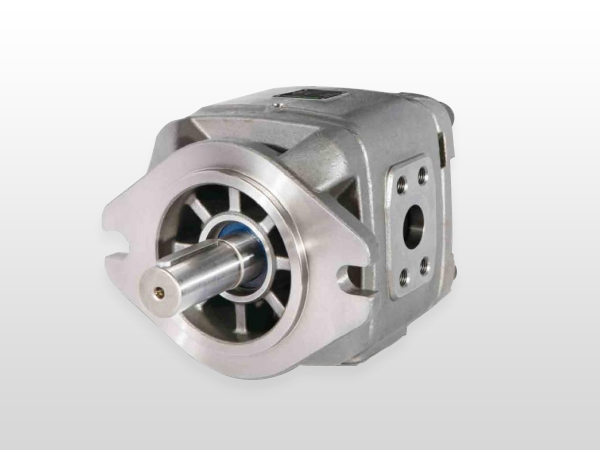
A gear pump is a commonly used hydraulic transmission component. It mainly consists of two meshing gears and achieves fluid suction and discharge through the rotation of the gears. Below is a detailed introduction to gear pumps, covering their structure, working principle, characteristics, and application scenarios.
I. Structure of Gear Pumps
A gear pump consists of a pump housing, gears, bearings, and seals. The pump housing is the outer shell of the pump, typically made of cast iron or aluminum alloy, and houses the two meshing gears. The gears are the core components of the pump, usually made of high-quality alloy steel to ensure high strength and wear resistance. The two gears have the same number of teeth and module, meshing together to form a sealed working chamber. Bearings are used to support the rotation of the gears and are typically rolling bearings or sliding bearings. Seals are used to prevent fluid leakage and usually adopt face seals or labyrinth seals.
II. Working Principle of Gear Pumps
When a gear pump is in operation, one gear acts as the driving gear, which is driven to rotate by a motor or other power source. The driving gear then drives the driven gear to rotate, forming a sealed working chamber between the teeth of the two gears. As the gears rotate, the volume of the working chamber constantly changes, thereby achieving fluid suction and discharge. Specifically, when the volume of the working chamber increases, fluid enters the pump from the suction inlet; when the volume decreases, the fluid is discharged from the pump outlet through the discharge port. In this way, the gear pump achieves continuous fluid delivery.
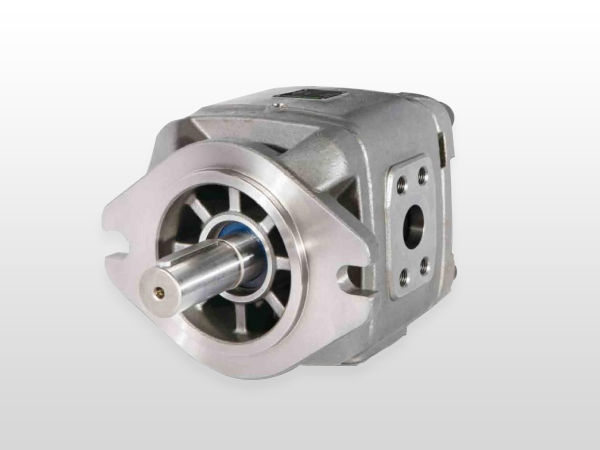
III. Characteristics of Gear Pumps
Simple Structure: Gear pumps consist of fewer components, featuring a simple and compact structure that makes them easy to manufacture and maintain.
Reliable Operation: Thanks to the use of high-quality alloy steel materials and high-precision machining processes, gear pumps exhibit high operational reliability and a long service life.
Stable Flow: The flow rate of a gear pump is directly proportional to its rotational speed, allowing for stable flow control by adjusting the speed.
High-Pressure Capability: Gear pumps can withstand relatively high pressures, making them suitable for high-pressure hydraulic systems.
Higher Noise Levels: Due to gear meshing and fluid impact, gear pumps tend to generate higher noise levels, requiring noise reduction treatment.
Sensitivity to Fluid Contamination: Components such as gears and bearings are highly sensitive to impurities and particulate matter in the fluid. Therefore, maintaining fluid cleanliness is essential.
IV. Application Scenarios
Gear pumps are widely used in various hydraulic systems across industries such as construction machinery, agricultural machinery, marine engineering, and aerospace.
In construction machinery, gear pumps are primarily used in the hydraulic systems of excavators, loaders, and road rollers to transmit power and actuate execution mechanisms.
In agricultural machinery, they are mainly used in the hydraulic systems of tractors and harvesters to realize various actions and functions.
In marine engineering, gear pumps are applied in the hydraulic systems of steering gears, windlasses, and deck machinery for ship maneuvering and control.
In the aerospace sector, gear pumps are utilized in the hydraulic systems of aircraft and rockets to actuate and control various mechanisms.
Building 7, Jinba Technology Park, No. 2 Dongsheng Industrial Road, Fenggang Town, Dongguan City, Guangdong Province
Follow us

 Chinese
 English
 >
>