
-
-
Trending searches: Internal gear pump | Double internal meshing gear pump | Gear pump manufacturer | Drilling and Tapping Center | Vertical hydraulic lathe
-
+86 13689586926
+86 13689586926
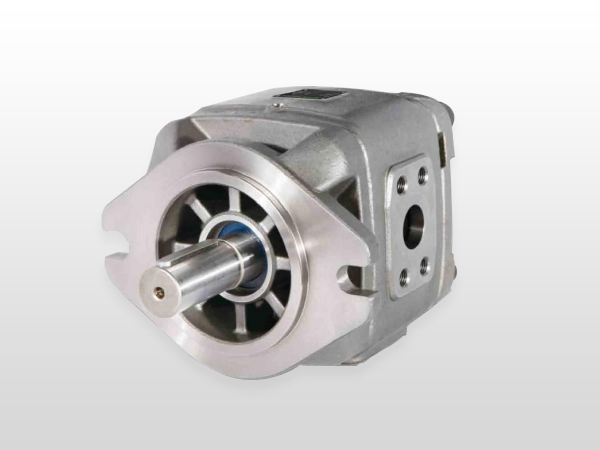
An internal gear pump is a specialized type of gear pump, featuring distinct structural and operational characteristics compared to other gear pumps. Below is a detailed introduction to its structure and working principle:
I. Structure of Internal Gear Pumps
The structure of an internal gear pump mainly consists of the following components:
Gear Shaft: The gear shaft in an internal gear pump is eccentric and typically comprises two meshing gears. The driving gear rotates the driven gear to complete the oil suction and discharge processes.
Pump Housing: As the core component of the pump, the housing forms a sealed chamber to accommodate the driving gear, driven gear, bearings, and other parts.
Bearings: Internal gear pumps generally utilize sliding bearings, which are capable of withstanding both radial and axial loads.
Side Plates: Fixed to the pump housing, the side plates form the suction and discharge chambers. They are typically machined with crescent-shaped channels to balance radial hydraulic pressure and bear axial loads.
Suction and Discharge Ports: These ports are usually located on the side plates, connecting directly with the crescent-shaped channels.
Safety Valve: Serving as a crucial safety protection device, the safety valve limits the maximum discharge pressure of the pump.
Shaft Seal: As a vital sealing component, the shaft seal prevents the leakage of hydraulic oil from the pump and stops external contaminants from entering.
II. Working Principle of Internal Gear Pumps
The working principle primarily relies on the gear tooth profile and sealing mechanisms. The detailed operational process is as follows:
Suction Process: As the driving gear rotates the driven gear, the unique tooth profile design ensures that during the engagement of the driving gear into the driven gear, the addendum (tip) of the driving gear forms a seal with the dedendum (root) of the driven gear. This draws hydraulic oil from the suction port into the spaces between the teeth.
Discharge Process: As the driving gear continues to rotate and disengages from the driven gear, the dedendum of the driving gear forms a seal with the addendum of the driven gear. This squeezes the hydraulic oil out from between the teeth and forces it out through the discharge port.
Function of the Crescent-Shaped Channel: The primary role of this channel is to balance radial hydraulic pressure and bear axial loads. By connecting the crescent-shaped channel on the side plate to both the suction and discharge ports, it ensures smooth fluid flow during operation while simultaneously balancing pressures and supporting axial loads.
Function of the Safety Valve: This valve restricts the maximum discharge pressure. If the pump's discharge pressure exceeds the preset threshold, the safety valve opens to release the excess hydraulic oil, thereby protecting both the pump and the hydraulic system.
Function of the Shaft Seal: It effectively prevents internal oil leakage and external contamination, ensuring the normal operation of the pump. Shaft seals typically employ mechanical seals or packing seals.
Summary:
Overall, internal gear pumps are widely used in hydraulic transmission systems due to their advantages, including a simple structure, compact size, lightweight design, and reliable operation. However, they do have certain drawbacks, such as relatively high flow pulsation and noise levels, which require continuous optimization and improvement during the design and application phases.
Building 7, Jinba Technology Park, No. 2 Dongsheng Industrial Road, Fenggang Town, Dongguan City, Guangdong Province
Follow us

 Chinese
 English
 >
>