
-
-
Trending searches: Internal gear pump | Double internal meshing gear pump | Gear pump manufacturer | Drilling and Tapping Center | Vertical hydraulic lathe
-
+86 13689586926
+86 13689586926
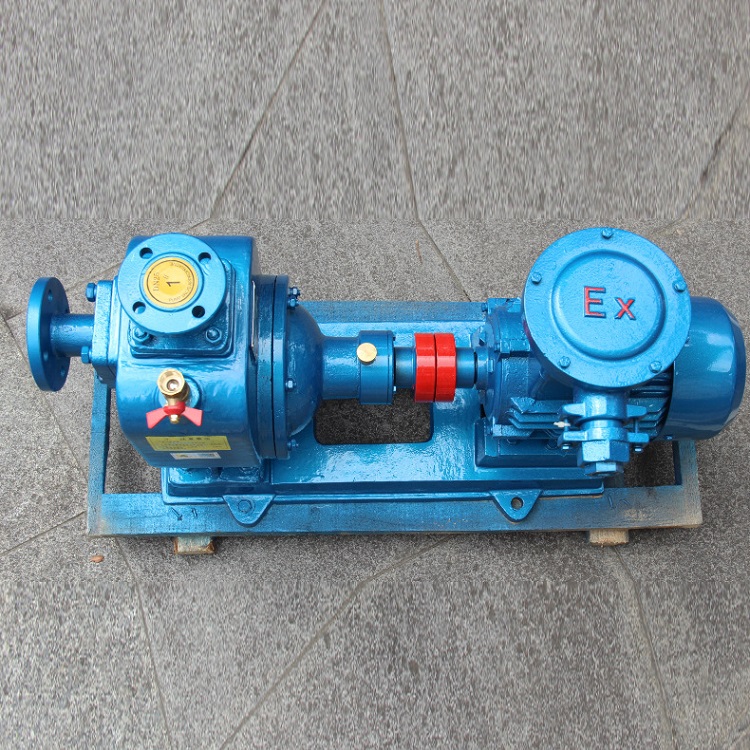
The manufacturing process and working principle of a self-priming oil pump are as follows:
Manufacturing Process
The manufacturing process of a self-priming oil pump typically involves the following main steps:
(1) Casting: First, based on the design drawings, the various components of the self-priming oil pump are cast. During the casting process, it is crucial to control the material ratio and quality to ensure the quality of the final product.
(2) Machining: After casting, each component must undergo machining to achieve precise dimensions and shapes. Specialized machine tools and equipment are used during this process to guarantee the accuracy and consistency of the parts.
(3) Assembly: The machined components are then assembled. During assembly, special attention must be paid to the fit and connections between the parts to ensure the product's sealing performance and reliability.
(4) Inspection: After assembly, the self-priming oil pump must undergo rigorous testing, including inspections of appearance, dimensions, and performance. The product can only proceed to the next stage after passing these inspections.
(5) Coating: Finally, the self-priming oil pump is coated to achieve an aesthetically pleasing appearance and anti-corrosion effects. During the coating process, the ratio and quality of the paint must be carefully controlled to ensure the quality and lifespan of the final product.
Working Principle
The working principle of a self-priming oil pump primarily relies on physical principles such as atmospheric pressure and centrifugal force. Specifically, before starting the pump, the pump body and the suction pipe must be completely filled with water to create a vacuum state. When the impeller rotates rapidly, its blades cause the water to spin quickly. Driven by centrifugal force, the spinning water is flung outward from the impeller. Once the water is expelled, a vacuum zone is formed at the center of the impeller. Under the action of atmospheric pressure, water from the water source enters the pump through the pipe, completing the self-priming process. Meanwhile, as the oil enters the pipe, the air is pushed out of the pump body along with the oil, ensuring the continuous delivery of the oil.
Main Structural Components
The structure of a self-priming oil pump typically includes the following main parts:
(1) Pump Body: The shape and dimensions of the pump body vary depending on the model and application, but it is generally made of metallic materials such as cast iron or cast steel. The interior of the pump body contains a suction pipe and a discharge pipe, which are connected to the suction valve and the discharge valve, respectively.
(2) Impeller: The impeller is one of the core components of a self-priming oil pump and is usually made of metallic materials like cast iron or cast steel. Its shape and size vary according to the model and application, but it is typically circular or eccentric. The impeller features several curved blades that draw in and expel liquid through their rotation.
(3) Shaft: The shaft is a critical component connecting the motor to the impeller and is typically made of steel or alloy materials. Bearings and seals are mounted on the shaft to ensure stable rotation and effective sealing.
(4) Motor: The motor serves as the power source for the self-priming oil pump and is usually driven by alternating current (AC) or direct current (DC). The motor is connected to the impeller via the shaft, enabling the impeller to rotate. The power and rotational speed of the motor vary depending on the model and application.
(5) Suction Valve: The suction valve controls the flow of liquid into the pump body and is generally made of metallic materials. It features several small holes and connects to the suction pipe inside the pump body. As the impeller rotates, these holes are opened by the liquid, allowing it to enter the pump body.
(6) Discharge Valve: The discharge valve controls the flow of liquid out of the pump body and is also typically made of metallic materials. It features several small holes and connects to the discharge pipe inside the pump body. As the impeller rotates, these holes are opened by the liquid, allowing it to be discharged from the pump body.
Building 7, Jinba Technology Park, No. 2 Dongsheng Industrial Road, Fenggang Town, Dongguan City, Guangdong Province
Follow us

 Chinese
 English
 >
>