
-
-
Trending searches: Internal gear pump | Double internal meshing gear pump | Gear pump manufacturer | Drilling and Tapping Center | Vertical hydraulic lathe
-
+86 13689586926
+86 13689586926
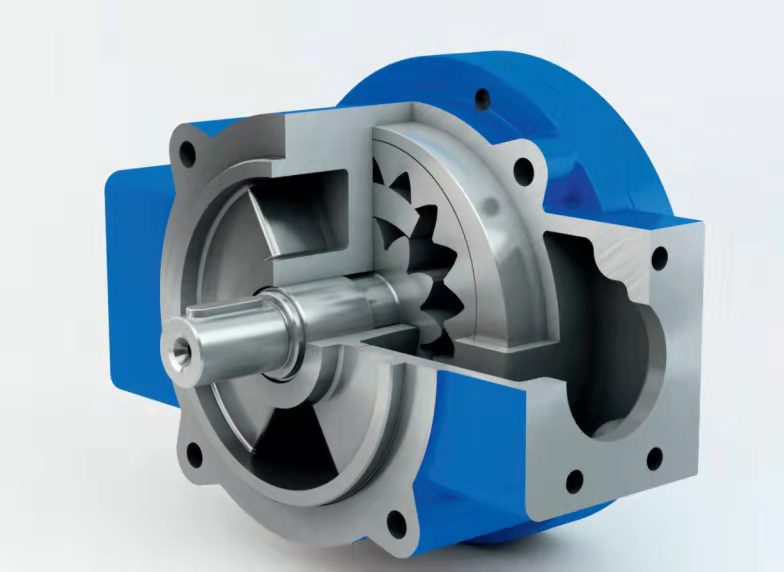
Stainless steel gear pumps are a common type of fluid transfer equipment. Due to their excellent corrosion resistance, high strength, and long service life, they are widely used in industries such as chemicals, food, and pharmaceuticals. The tooth profile and manufacturing processes of a stainless steel gear pump have a significant impact on its performance and reliability. This article will introduce the common tooth profiles and manufacturing processes of stainless steel gear pumps.
I. Common Tooth Profiles
Spur Gears
Spur gears are a fundamental gear type in which the teeth are perpendicular to the gear's axis of rotation. They are widely used in stainless steel gear pumps due to their advantages, including simple manufacturing, good interchangeability, and high bending strength. However, gear pumps with spur gears tend to have significant flow pulsation, higher noise levels, and stricter requirements for the cleanliness of the fluid.
Helical Gears
The teeth of helical gears are set at an angle to the gear's axis, typically ranging from 15° to 45°. Helical gears can reduce impact and vibration during gear transmission, thereby improving transmission smoothness. In stainless steel gear pumps, helical gears are suitable for harsh operating conditions, such as high rotational speeds, high pressures, and high temperatures. However, machining helical gears is more difficult and costly.
Curved Gears
Curved gear teeth feature an arc shape, offering advantages such as smooth transmission, strong load-bearing capacity, and low noise. In stainless steel gear pumps, curved gears are ideal for transferring fluids with high viscosity, containing impurities, or possessing corrosive properties. Nevertheless, the machining of curved gears is complex and relatively expensive.
II. Manufacturing Processes
Casting Process
Casting is a common manufacturing process for stainless steel gear pumps, encompassing sand casting, metal mold casting, and die casting. This process can produce complex-shaped components, such as gears and pump bodies. During casting, it is crucial to strictly control factors like melting temperature, pouring speed, and cooling time to ensure product quality.
Machining Process
Machining is one of the most frequently used manufacturing methods for stainless steel gear pumps, including turning, milling, and drilling. This process precisely shapes and sizes the blanks to meet product performance requirements. During machining, it is essential to select appropriate cutting tools, cutting fluids, and machining parameters to improve both processing efficiency and product quality.
Rolling Process
Rolling is a method for producing high-precision, high-performance stainless steel materials, making it suitable for manufacturing components of stainless steel gear pumps. It includes both hot rolling and cold rolling. Through the rolling process, stainless steel materials with high strength, high hardness, and excellent corrosion resistance can be produced, thereby enhancing the overall quality and reliability of the gear pump.
Welding Process
During the manufacturing of stainless steel gear pumps, it is often necessary to join components made of different materials, and welding is a common joining method. It is vital to select the appropriate welding techniques and materials to ensure welding quality and the strength of the joints. Additionally, controlling welding deformation and residual stress is necessary to guarantee the stability and reliability of the final product.
Surface Treatment Process
Surface treatment for stainless steel gear pumps includes various methods such as shot peening, painting, and electroplating. These treatments not only improve the aesthetic appeal and corrosion resistance of the product but also extend its service life. During the surface treatment process, selecting the right treatment methods and parameters is crucial to ensuring the treatment quality and overall product performance.
Building 7, Jinba Technology Park, No. 2 Dongsheng Industrial Road, Fenggang Town, Dongguan City, Guangdong Province
Follow us

 Chinese
 English
 >
>