
-
-
Trending searches: Internal gear pump | Double internal meshing gear pump | Gear pump manufacturer | Drilling and Tapping Center | Vertical hydraulic lathe
-
+86 13689586926
+86 13689586926
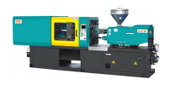
The working principle of an injection molding machine can be summarized in the following steps:
Clamping: The clamping unit of the injection molding machine closes the moving and stationary halves of the mold to form a sealed cavity. This cavity is formed by the mold's cavity surfaces and the machine's nozzle.
Injection: After the clamping unit closes the mold, the injection unit injects the plastic melt into the cavity. The injection unit typically consists of an injection screw, a barrel, and heating bands. During the injection process, the plastic melt is heated by the heating bands and driven by pressure to flow from the barrel into the cavity.
Holding Pressure: After the plastic melt is injected into the cavity, the holding pressure mechanism engages to maintain a specific pressure. This ensures the cavity is completely filled and prevents the plastic from flowing back out of the mold.
Cooling: During the holding pressure phase, the plastic melt gradually cools and solidifies into the final molded part. This process requires a certain amount of time to allow the plastic to cool sufficiently and achieve the desired strength and dimensional stability.
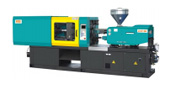
Mold Opening: Once the plastic melt has cooled, the mold-opening mechanism activates to separate the moving and stationary mold halves, allowing the finished part to be ejected.
An injection molding machine is a highly efficient and flexible manufacturing device capable of producing plastic products in a wide variety of shapes and sizes, such as packaging containers, automotive components, and building materials. The advantages of injection-molded products include high precision, high efficiency, high reliability, and excellent surface finish.
However, the injection molding process also has some drawbacks and limitations. For example, the size and shape of the final product are restricted by the mold, which must be designed and manufactured in advance, resulting in high initial costs. Additionally, the process consumes a large amount of plastic raw materials, which can have a certain environmental impact. Therefore, when selecting and operating an injection molding machine, it is necessary to comprehensively weigh its pros and cons against specific production requirements.
In conclusion, the injection molding machine is a vital manufacturing equipment with broad application and market prospects. Understanding its working principles, advantages, and limitations helps in making better choices for equipment selection and operation, ultimately improving production efficiency and product quality.
Building 7, Jinba Technology Park, No. 2 Dongsheng Industrial Road, Fenggang Town, Dongguan City, Guangdong Province
Follow us

 Chinese
 English
 >
>